
Podikizhi vs Elakizhi vs Njavarakizhi: Which Herbal Bolus Suits Your Condition

Panchakarma · Physician-Led Ayurveda

Basti Therapy: The Ayurvedic Enema for Spine, Joint and Nervous System Health

Basti is called the “half of all Ayurvedic treatment” for Vata disorders. Learn how Anuvasana and Niruha Basti work for spine, joint and nerve conditions.

P
Pranavam Ayurveda • Kozhikode, Kerala
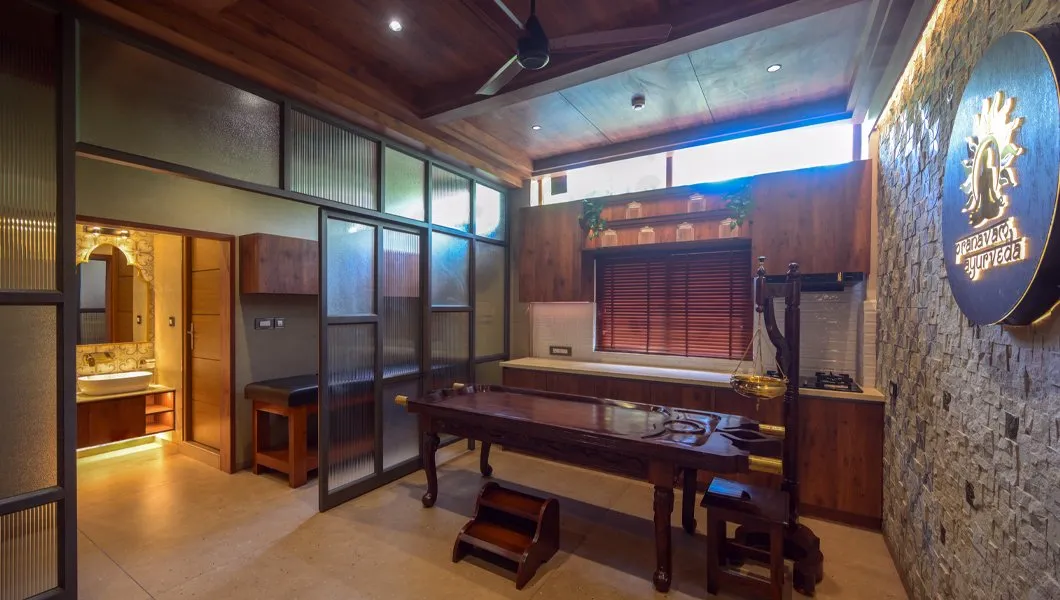
Panchakarma therapy being performed in a clinical treatment room at Pranavam Ayurveda Hospital, Kozhikode
Quick Answer

Basti is the Panchakarma therapy in which medicated oils or herbal decoctions are administered through the rectum. Ayurveda regards it as the principal treatment for aggravated Vata, the Dosha linked to the spine, joints and nervous system. The two main forms are Anuvasana (oil) and Niruha (decoction). At Pranavam Ayurveda Hospital, it is prescribed only after a physician’s assessment, as a scheduled course tailored to the individual.

Basti and the Vata Connection

Classical Ayurvedic texts describe three Doshas, Vata, Pitta and Kapha, that govern the body’s functions. Vata is the principle of movement. It is associated with the nervous system, the spine and joints, and the functioning of the colon. When Vata becomes aggravated, it is traditionally linked with pain, stiffness, dryness, constipation, tremor and disturbed sleep.

The colon is regarded in Ayurveda as the primary seat of Vata. This is why Basti, which acts through the colon, is considered the most important therapy for Vata disorders and is often called the “half of all Ayurvedic treatment”. Some classical authors regard it as even more than half.

Basti is one of the five Panchakarma procedures. It is never a do-it-yourself remedy. The type of Basti, the medicines used and the number of sessions are all decided by an Ayurvedic physician after assessing the individual.

The Two Main Types: Anuvasana and Niruha Basti

Although many variations exist, Basti is broadly divided into two types. They are often combined in a single course, depending on the physician’s plan.

Anuvasana Basti

Oil-based · Nourishing
  • Uses medicated oil or ghee in a smaller quantity
  • Retained in the body for longer
  • Nourishes and lubricates, which suits dry, Vata-type conditions
  • Usually given after a meal

Niruha (Kashaya) Basti

Decoction-based · Cleansing
  • Uses herbal decoctions blended with oil, honey and salt
  • Larger quantity, expelled within a short time
  • Cleanses the colon and helps remove accumulated waste
  • Usually given on an empty or light stomach

Anuvasana vs Niruha Basti at a glance. The exact medicines are chosen by the treating physician.

Ayurvedic physician explaining the Basti treatment protocol to a patient at Pranavam Ayurveda Hospital

In practice, a physician may begin with Anuvasana, follow with Niruha, and finish with Anuvasana again, a sequence meant to cleanse first and then nourish. Medicated oils such as Sahacharadi, Dhanwantharam or Ksheerabala are commonly used in Kerala practice, but the choice is always based on the individual’s symptoms and constitution.

Before starting, the physician explains the protocol, the number of sessions and what to expect, so the patient feels comfortable and informed.

Kala, Karma and Yoga Basti Schedules Explained Simply

Classical texts describe three standard schedules that differ in the number of sessions. The physician selects one according to the condition, its duration and the patient’s strength.

Yoga Basti

The shortest course, about 8 sessions, alternating Anuvasana and Niruha. Often chosen for milder or more recent conditions.

Kala Basti

A mid-length course of about 15 to 16 sessions, commonly used for chronic spine and joint conditions.

Karma Basti

The longest course, about 30 sessions, reserved for deep-seated or long-standing Vata disorders in patients who are strong enough for it.

These numbers are classical guidelines rather than fixed rules. The actual schedule is adapted to each patient and may be modified or stopped if the body does not respond well.

Conditions Basti Is Classically Used For

In Ayurveda, Basti is traditionally recommended for conditions in which aggravated Vata is considered to play a central role. Whether it suits a particular person is decided only after consultation.

Low back pain
Sciatica
Arthritis and joint stiffness
Chronic constipation
Neurological Vata disorders

For back pain and sciatica, Basti is usually combined with other therapies and a personalised care plan. You can read more in our guides on back pain treatment, arthritis treatment and sciatica treatment. Neurological conditions need proper medical evaluation first, and Basti is considered only as supportive care alongside appropriate medical management.

What a Basti Session Feels Like: Preparation and Aftercare

Preparation

Basti is usually preceded by Snehana (external oil massage) and Swedana (mild steam), which prepare the body and relax the muscles. The physician advises on the diet before the session, which is typically light and easily digested, and on the timing of meals.

During the session

The patient lies on the left side, and the medicated preparation is introduced gently through the rectum using a sterile, disposable nozzle. The procedure itself takes only a few minutes. Most people describe a mild feeling of fullness and an urge to pass the preparation afterwards, rather than pain.

Aftercare

  • Rest for a short while after the session
  • Eat light, warm, freshly cooked meals as advised
  • Avoid cold foods and drinks, exposure to cold wind and heavy exertion
  • Maintain regular sleep and avoid suppressing natural urges
  • Follow the physician’s diet and activity guidance throughout the course

Safety: Who Should Avoid Basti

Basti is not suitable for everyone. It should be done only under the supervision of a qualified Ayurvedic physician after a proper assessment. It may need to be avoided or postponed in situations such as:

  • Pregnancy
  • Rectal bleeding, piles with active bleeding or other acute rectal conditions
  • Severe diarrhoea or dehydration
  • Fever or acute illness
  • Severe weakness or very advanced age without physician approval
  • Recent abdominal surgery or acute abdominal pain
  • Bleeding disorders or use of blood thinners

Anyone with a chronic medical condition should tell the physician about all their medicines. Sudden severe pain, weakness in a limb or loss of bladder or bowel control needs urgent medical evaluation before any Ayurvedic treatment is considered.

What Physician-Guided Care Aims For

What Basti Aims to Support

Basti is generally intended to support the following. Results depend on the underlying condition, overall health and adherence to the treatment plan.

Relief from Vata-related pain and stiffness
Improved bowel regularity
Better mobility of spine and joints
Overall nervous system wellbeing

Frequently Asked Questions

Is Basti the same as a modern enema?
No. A modern enema is mainly used to empty the bowel. Basti uses medicated oils and herbal decoctions chosen for the individual, is given as part of a planned course, and is preceded by preparation and followed by diet and lifestyle guidance. It is aimed at balancing Vata rather than simply cleansing the bowel.
Is it uncomfortable?
Most people find it more unfamiliar than painful. A mild sense of fullness or an urge to pass the preparation is common. Your physician will explain every step beforehand, and you should tell the team if you feel any discomfort during the procedure.
How many sessions are typically needed?
It depends on the condition and the schedule chosen. Classically, Yoga Basti is about 8 sessions, Kala Basti about 15 to 16 and Karma Basti about 30. The physician decides the plan after assessment and may adjust it as you progress.
Can Basti be done at home?
It is not recommended. The medicines must be selected and prepared correctly, the patient needs to be assessed before and after each session, and the diet and rest must be supervised. Basti should be done only at a centre with a qualified Ayurvedic physician.

Ready to Find Out If Basti Is Right for You?

Receive a personalised assessment from our physicians and explore a physician-guided Panchakarma plan at Pranavam Ayurveda Hospital, Kozhikode.

Book an Appointment
This article is for general educational purposes and does not constitute individual medical advice. Basti therapy should only be undertaken following a full evaluation and ongoing supervision by a qualified physician. Treatment outcomes vary by individual.