How Long Does an Ayurvedic Treatment Session Usually Take?
A physician's guide to how long individual therapies take, what a full treatment day looks like, and how session length differs from programme length.
Many individual Ayurvedic therapies take around 45 to 90 minutes, including preparation and rest. But that number answers only part of the question — a single session is not the same as a full treatment programme.
On this page
If you are planning Ayurvedic treatment for the first time, one of the most practical questions is simple: how much time will I need to spend at the clinic each day?
As a general guide, many individual Ayurvedic therapies take around 45 to 90 minutes, including preparation and the period of rest afterwards. However, there is no single duration that applies to every therapy or every patient. The actual time depends on the procedure, your health condition, the physician's treatment plan and whether more than one therapy is scheduled on the same day.
It is also important to distinguish between the duration of an individual therapy session and the duration of an entire Ayurvedic treatment programme. If you are planning Ayurveda treatment in Kerala, understanding both can help you organise your work, travel and accommodation more realistically.

How Long Do Common Ayurvedic Therapies Take?
The following are general ranges for planning purposes. Actual treatment time can vary according to the patient's condition and the physician's protocol.
| Therapy | Active treatment time | Rest / post-treatment | Approx. total time |
|---|---|---|---|
| Abhyanga | 30–60 minutes | 15–30 minutes | 45–90 minutes |
| Shirodhara | 30–45 minutes | 15–30 minutes | 45–75 minutes |
| Kizhi / Pizhichil | 30–60 minutes | 15–30 minutes | 45–90 minutes |
| Kati Basti | 20–40 minutes | 15–30 minutes | 35–70 minutes |
| Nasya | 15–30 minutes | 15–30 minutes | 30–60 minutes |
| Basti | Varies by procedure | As advised | Varies |
| Udvartana | 30–60 minutes | 15–30 minutes | 45–90 minutes |
These figures should not be treated as fixed appointment times. Some procedures require additional preparation, while others may involve a longer period of observation or rest. Your physician or treatment centre should provide the most accurate schedule for your particular programme.
Why Does Treatment Include a Rest Period?
If you have been told that a therapy takes an hour, you might assume that the entire hour involves active treatment. That is not always the case — preparation and post-treatment rest can form an important part of the overall treatment process.
For example, after an oil-based therapy, the patient may be advised to rest before continuing with normal activities. Depending on the treatment, the physician may also provide specific instructions regarding bathing, food, exercise and other activities. The rest period is therefore not simply waiting around while the treatment finishes — it is part of transitioning from the therapy back into your normal routine.

How Long Do Individual Therapies Take?
01
Abhyanga
An Ayurvedic oil massage using warm oil selected according to the treatment plan. Active massage may take approximately 30 to 60 minutes, with additional time for preparation and rest. Duration can vary depending on the area treated and whether it's combined with another therapy.
02
Shirodhara
The controlled pouring of liquid, commonly oil, over the forehead area. The procedure itself may take around 30 to 45 minutes, with preparation and rest afterwards extending total time at the treatment room.
03
Kizhi & Pizhichil
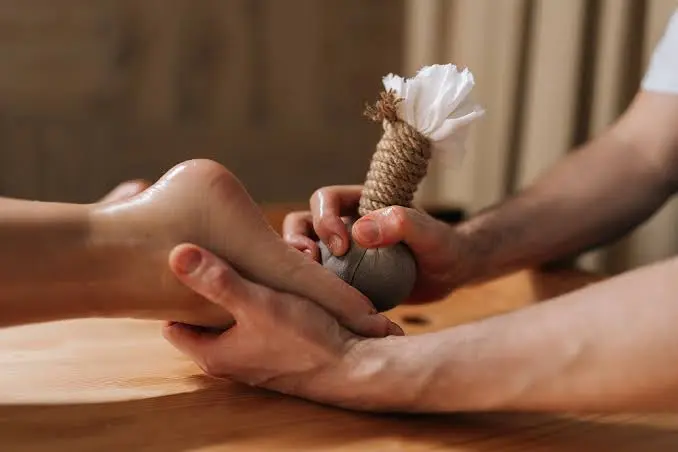
Kizhi involves heated herbal boluses applied to the body; Pizhichil involves a continuous flow of warm medicated oil. The active portion commonly takes around 30 to 60 minutes, depending on the protocol.
04
Kati Basti
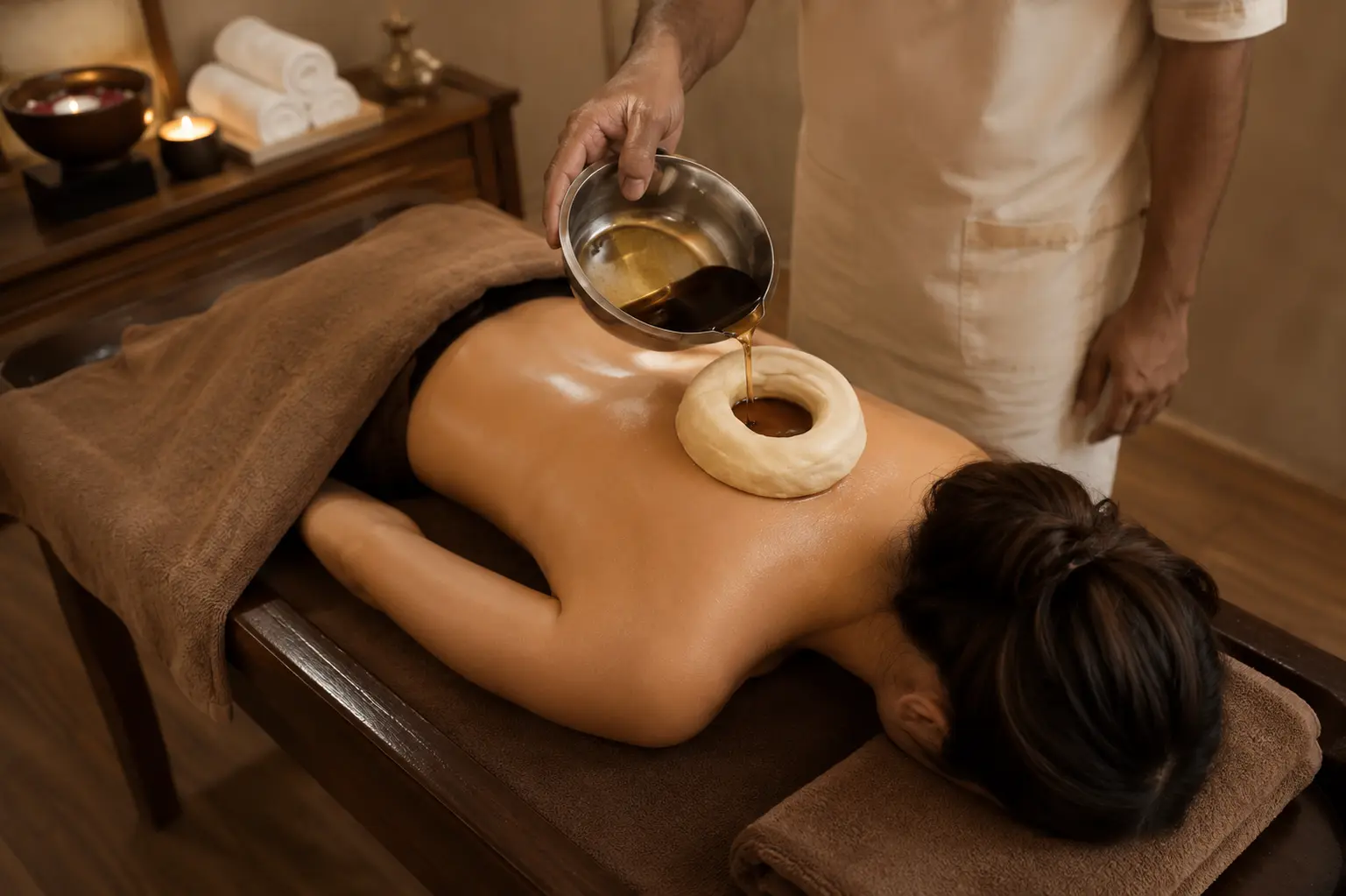
Retaining warm medicated oil over the lower back within a herbal dough boundary. Treatment may take approximately 20 to 40 minutes, followed by time for removal, cleaning and rest.
05
Nasya
Administration of prescribed substances through the nasal route. The procedure itself may be relatively short, but preparation and post-treatment instructions add to the overall appointment time.
06
Basti
A group of procedures involving administration through the rectal route. It is not appropriate to assign one fixed duration, since the method, preparation and observation requirements differ by procedure.
07
Udvartana
Application and massage of herbal powders or other prescribed substances over the body. Active treatment can take approximately 30 to 60 minutes, followed by cleaning and any required rest.
What Does a Full Ayurvedic Treatment Day Look Like?
An Ayurvedic treatment day is not necessarily one therapy followed immediately by another. Depending on your condition and treatment plan, your physician may prescribe one or more therapies during the day. The sequence matters — therapies may require preparation, food restrictions, rest or a particular interval between procedures. This is why treatment centres generally do not simply stack several therapies back to back; the objective is to follow the prescribed treatment sequence rather than complete as many procedures as possible in the shortest time.
Consultation or prescribed therapy.
Another scheduled treatment.
Rest, meals and recovery time.
Additional therapy where clinically appropriate.
Session Duration vs Programme Duration
One therapy may take an hour, but your complete Ayurvedic treatment programme can last considerably longer. Programmes are sometimes planned around periods such as these — examples of programme lengths, not universal rules. The correct duration depends on your condition, treatment objectives, response to therapy and the physician's assessment. For Panchakarma in particular, preparation, the main procedures and post-treatment recovery can all influence the overall duration.
Option
7 Days
A shorter programme may be considered for selected treatments or patients with limited time, depending on the clinical recommendation.
Option
14 Days
A two-week programme provides more time for a structured sequence of therapies and reassessment.
Option
21 Days
A three-week programme may be recommended when a longer treatment and recovery process is considered appropriate.
What Makes an Ayurvedic Session Take Longer?
Several factors can increase the amount of time you spend at the treatment centre. For this reason, it is better to plan your day around a treatment window rather than assuming every appointment will finish at exactly the same time.
Your Condition
More complex or chronic conditions may require a more structured treatment plan and additional assessment.
Combined Therapies
If multiple therapies are prescribed on the same day, the total appointment time naturally increases.
Preparation
Some therapies require preparation before the active procedure begins.
Post-Treatment Rest
Your physician may recommend a specific rest period after treatment.
If you have a scheduled consultation or reassessment on the same day, additional time may also be needed.
The takeaway: A 60-minute therapy doesn't mean your entire Ayurvedic day, or programme, lasts only an hour. Plan around a treatment window, not a fixed appointment slot.
Outpatient vs Inpatient Treatment
Your daily schedule can look very different depending on whether you are receiving outpatient or inpatient care.
Outpatient Treatment
Visiting for Each Session
If you are visiting an Ayurvedic clinic in Kerala as an outpatient, you may need to travel to the centre for each scheduled therapy. This can work well when you live nearby and your treatment programme does not require extended inpatient supervision. However, travel time needs to be considered alongside treatment time — a 60-minute therapy may take considerably longer once you include transportation, registration and waiting.
Inpatient Treatment
Staying at the Facility
With inpatient treatment, you remain at the facility throughout the programme. This can make scheduling easier because therapies, meals, consultations and rest periods can be organised within the same environment. It can also be more practical for treatment programmes involving multiple procedures or closer physician supervision. Your physician can advise which arrangement is appropriate for your treatment.
How Many Days Will You Need?
There is no universal number of days for Ayurvedic treatment. Your physician may consider:
- Your condition
- Duration of symptoms
- Overall strength
- Previous treatments
- Response to therapy
- Type of therapies required
- Whether preparation is necessary
- Whether you need inpatient care
A longer programme is not automatically better, just as a shorter programme is not automatically sufficient. The treatment duration should be based on your individual clinical requirements.
Scheduling Ayurvedic Treatment at Pranavam
At Pranavam Ayurveda, treatment schedules are planned around the patient's individual programme and the therapies recommended by the physician. During consultation, patients can discuss the expected treatment duration, number of sessions, daily schedule and whether inpatient or outpatient care is appropriate.
If you are planning Ayurveda treatment in Kerala, understanding the schedule before you travel is particularly useful. It allows you to organise accommodation, work leave and transportation without making assumptions about how long each day will take.
You can learn more about the treatments offered through Pranavam Ayurveda's Ayurvedic Treatments. The exact schedule should be confirmed with the treatment team because therapies and timings can change according to your clinical response.
Frequently Asked Questions
How many sessions will I need?
Can I have two therapies in one day?
What time of day is best for treatment?
Can I drive home after a session?
Can I shower immediately after an oil therapy?
Planning a Visit to Pranavam?
Ask about the expected daily schedule and total programme duration before making your work, travel or accommodation arrangements.
Book a ConsultationRelated Reading