
Pranavam Ayurveda · Kozhikode
Digestive & Gut Health
Care
Physician-guided Ayurvedic treatment for IBS, acid reflux, chronic constipation, colitis, and impaired digestion — rooted in classical Kerala tradition since 2005.
Ayurvedic Name
Agni & Annavaha Srotas
Conditions We Address
Not One Condition —
A Spectrum of
Digestive Concerns
In Ayurveda, all disease begins with a weakened or imbalanced Agni — the digestive fire. At Pranavam Ayurveda, gut and digestive conditions are never managed with a single protocol. Each patient's condition, dosha pattern, Ama burden, and root causative factors are assessed individually before any treatment is designed.
Irritable Bowel Syndrome
Chronic functional bowel disorder characterised by abdominal pain, bloating, alternating constipation and diarrhoea, and gut hypersensitivity. Ayurveda views IBS as a Vata-Pitta disturbance of the Purishavaha and Annavaha Srotas, addressed through targeted Basti, herbal medicines, and dietary restructuring.
GrahaniAcid Reflux & GERD
Regurgitation of stomach acid causing heartburn, chest discomfort, and oesophageal irritation — often worsened by irregular meals, stress, and spicy foods. Classically described as Amlapitta, a Pitta-dominant condition of the Annavaha Srotas managed through Virechana, herbal formulations, and Ahara correction.
AmlapittaChronic Constipation
Persistent difficulty in bowel evacuation, infrequent stools, and incomplete emptying — driven by Vata aggravation, low fibre intake, dehydration, and sedentary habits. Ayurvedic management addresses root Vata imbalance through Basti, Snehapana, herbal formulations, and personalised dietary guidance.
VibandhaAyurvedic Therapies
Classical Treatments,
Individually Prescribed
Digestive conditions each carry distinct dosha patterns, Ama burden, and channel involvement. The therapies below are selected and combined by our physicians based on your specific diagnosis and constitution — never as a fixed package.
Purgation Panchakarma
Virechana
Medicated therapeutic purgation using physician-prescribed herbal formulations to eliminate excess Pitta and Ama from the digestive tract, liver, small intestine, and Rakta Dhatu. Considered Ayurveda's most effective intervention for Pitta-dominant digestive disorders, Virechana clears accumulated toxins, resets Agni, and restores normal gut function.
Classical Indication
Amlapitta, GERD, inflammatory bowel conditions, liver disorders, Pitta-dominant IBS, skin conditions with digestive origin, and generalised Ama accumulation in the gut channels.
Physician Note
Virechana is preceded by internal oleation (Snehapana) and Abhyanga fomentation. Formulation, dosage, and suitability are individually assessed by the treating physician.

Colon Therapy — Panchakarma
Basti
The foremost Panchakarma therapy for Vata-dominant digestive disorders, Basti involves the administration of medicated decoctions or oils per rectum to directly act on the large intestine and Vata Sthana. It is particularly central to the management of IBS, chronic constipation, and inflammatory colonic conditions — addressing root Vata imbalance at its primary site.
Classical Indication
Grahani, Vibandha, Vata-dominant IBS, ulcerative colitis in suitable patients, chronic bloating, and Vata disorders of the large intestine as classically described.
Physician Note
The type of Basti (Niruha or Anuvasana), herbal composition, and schedule are individually prescribed based on the specific condition and clinical assessment.
Internal Oleation Therapy
Snehapana
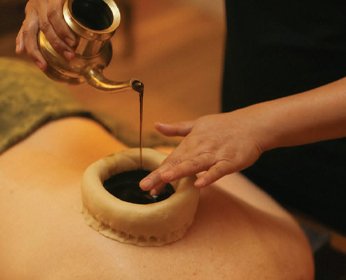
Graduated internal administration of medicated ghee or oils in increasing doses over several days, performed as the preparatory phase before major Panchakarma procedures. Snehapana lubricates the entire digestive tract, loosens deep-seated Ama from the tissues, and prepares the gut channels for effective elimination through Virechana or Vamana.
Classical Indication
Pre-Panchakarma preparation for all gut disorders, chronic dry constipation, Vata-dominant digestive conditions, and conditions requiring deep tissue lubrication before cleansing.
Physician Note
The choice of Sneha (ghee formulation or medicated oil), dose escalation schedule, and duration are individually determined by the physician prior to commencement.

Emesis Panchakarma
Vamana
Medicated therapeutic emesis designed to eliminate excess Kapha and Pitta from the stomach, oesophagus, and upper gastrointestinal tract. Classically indicated for conditions rooted in upper digestive Kapha accumulation, Vamana is particularly relevant for chronic nausea, GERD with Kapha dominance, and digestive congestion that does not respond adequately to dietary measures alone.
Classical Indication
Kapha-dominant Amlapitta, chronic nausea, upper GI Ama accumulation, and digestive disorders with a strong Kapha component as classically described.
Physician Note
Vamana requires careful pre-procedure preparation and strict physician assessment for suitability. It is administered under direct physician supervision throughout.
Full-Body Medicated Oil Massage
Abhyanga
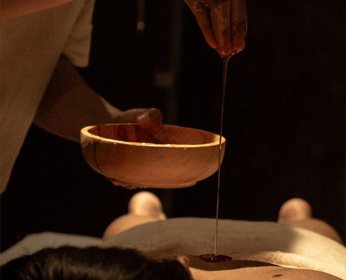
A full-body therapeutic oil massage forming the daily preparatory step for all Panchakarma gut programmes. In the context of digestive care, Abhyanga works by loosening peripheral Ama and Vata, improving lymphatic flow, calming the nervous system — particularly relevant when stress and anxiety are identified as triggers for the patient's digestive condition.
Classical Indication
Pre-Panchakarma preparation, stress-triggered IBS, Vata-dominant constipation, and digestive disorders involving significant nervous system component.
Physician Note
Oil selection and massage protocol are tailored after individual physician assessment. Abhyanga is typically combined with Swedana (steam) before deeper Panchakarma procedures.
Agni Restoration Therapy
Deepana-Pachana
A pre-Panchakarma preparatory phase using specific herbal formulations to kindle the digestive fire (Deepana) and digest accumulated Ama (Pachana) before any major cleansing procedure is initiated. This step is essential in all gut care programmes at Pranavam — without it, stronger therapies act on undigested Ama rather than clearing it, reducing effectiveness and increasing discomfort.
Classical Indication
Mandagni, Sama Dosha conditions with active Ama, pre-Panchakarma preparation for all digestive disorders, and chronic conditions involving significant toxin accumulation.
Physician Note
The specific Deepana-Pachana herbal combination and duration are prescribed based on the patient's Ama assessment and the intended main Panchakarma procedure.

Common Questions
Digestive & Gut Health
Treatment — FAQs
Answers to questions we hear most often from patients considering Ayurvedic digestive care at Pranavam.
In Ayurveda, Agni — the digestive fire — is considered the foundation of all health. When Agni is balanced, food is properly digested and nourishment reaches every tissue. When Agni is weakened or disturbed, undigested matter (Ama) accumulates in the channels, forming the root cause of most digestive and systemic disorders.
Ayurvedic management of IBS (Grahani) may help reduce symptom frequency and severity through personalised Basti therapy, herbal formulations, and dietary restructuring. Treatment is entirely individualised — the specific dosha pattern and Ama burden determine which therapies are most appropriate for each patient.
Ayurvedic treatment for suitable ulcerative colitis patients may be considered following physician assessment. Suitability depends on disease severity, current flare status, and overall health. Treatment is designed to work alongside existing medical management — patients should not discontinue conventional medications without guidance from their gastroenterologist.
Ama is the Ayurvedic concept of undigested metabolic waste that accumulates in the body's channels when Agni is insufficient. It is sticky, heavy, and obstructive — blocking normal tissue nourishment and creating a fertile environment for disease. Eliminating Ama before administering deeper therapies is an essential first step in all gut care programmes at Pranavam.
Dietary guidance is inseparable from any Ayurvedic digestive treatment programme. Your physician will provide specific Ahara (dietary) recommendations tailored to your dosha pattern, current condition, and the phase of treatment — including guidance on meal timing, food combinations, and what to avoid.
Amlapitta (acid reflux and GERD) is among the most commonly managed digestive conditions at Pranavam Ayurveda. A Pitta-pacifying treatment approach involving Virechana, cooling herbal formulations, and dietary correction may help reduce symptom frequency and support mucosal health — individually designed after physician consultation.
Duration depends on the specific condition, chronicity, Ama burden, and the Panchakarma procedures involved. Most digestive programmes include a preparatory phase (Deepana-Pachana and Snehapana), a main treatment phase, and a post-procedure Samsarjana (dietary restoration) period. Your physician will outline the expected timeline after consultation.
Begin Your Recovery
Speak With Our Physicians About Your Digestive Health
Digestive and gut conditions respond differently in each patient. A consultation at Pranavam Ayurveda gives you an honest clinical picture — and a treatment plan matched to your actual condition, dosha pattern, and Ama burden.
- Physician-led assessment from day one
- Condition-specific care — IBS, reflux, colitis, and more
- Authentic Kerala Panchakarma therapies
- Integrates safely with existing medications
- Classical Ayurveda since 2005, Kozhikode
Authentic Kerala Ayurveda · Kozhikode