Abhyanga Massage Benefits: Why Warm Oil Massage Is an Ayurvedic Foundation
Ayurvedic Oil Therapy · Authentic Kerala Ayurveda

Abhyanga Massage Benefits: Why Warm Oil Massage Is an Ayurvedic Foundation

A physician-led guide from Pranavam Ayurveda Hospital on what sets clinical Abhyanga apart from a general spa massage, how it is performed, how oils are chosen for each constitution, and where it fits within Panchakarma preparation.

P
Pranavam Ayurveda
• Kozhikode, Kerala
Kerala Abhyanga oil massage therapy at Pranavam Ayurveda Hospital Image 1 — Kerala Abhyanga Oil Massage Therapy at Pranavam Ayurveda Hospital
Quick Answer

Abhyanga is a traditional Ayurvedic oil therapy in which warm, often medicated oil is applied to the body using specific strokes and techniques. Unlike a general spa massage, the oil, technique, duration and frequency are chosen according to the individual's constitution, health condition and purpose of treatment, whether as a standalone therapy or as preparation for Panchakarma.

Warm oil, slow rhythmic movements and a treatment selected according to the individual: at first glance, Abhyanga can look similar to an ordinary oil massage.

But in Ayurveda, its purpose is different.

Abhyanga therapy is a traditional Ayurvedic oil application in which warm oil, often medicated with herbs, is applied systematically to the body using specific strokes and techniques. It may be prescribed as an individual therapy or used as part of the preparation for Panchakarma.

For people searching for a Kerala Abhyanga massage, understanding this difference is important. Authentic Abhyanga is not simply about choosing an aromatic oil and having a relaxing massage. The oil, technique, duration and frequency can be selected according to the person's constitution, health condition and purpose of treatment.

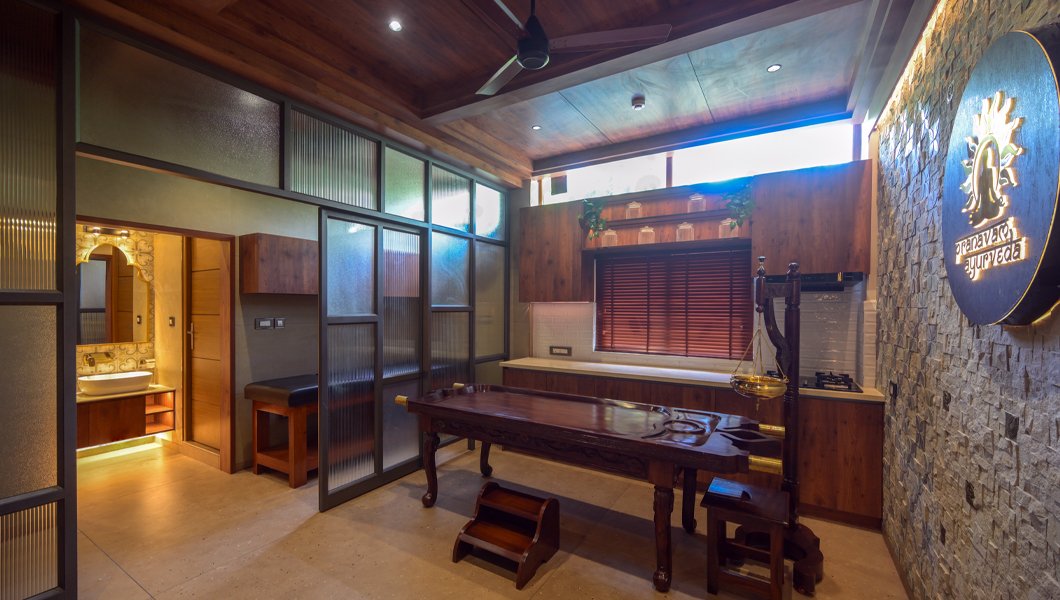
Ayurvedic physician consultation before Abhyanga therapy at Pranavam Ayurveda Hospital Image 2 — Ayurvedic Physician Consultation Before Abhyanga Therapy at Pranavam Ayurveda Hospital

What Is Abhyanga Therapy?

Abhyanga is one of Ayurveda's best-known external oil therapies. The word generally refers to the application and massage of oil over the body. In clinical Ayurvedic practice, however, the treatment can be more structured than a conventional massage.

Warm herbal or medicated oil is applied across the body using rhythmic strokes. Depending on the treatment protocol, one or more therapists may perform the procedure. The direction, pressure and repetition of the movements can vary across different parts of the body. The physician may also select a particular medicated oil based on the patient's Ayurvedic assessment rather than using the same oil for everyone, one of the main differences between classical Abhyanga and a general spa oil massage.

Traditionally Associated With

What Ayurveda Associates With Abhyanga

Muscle relaxation and physical comfort

Sense of joint ease and warmth

Skin conditioning and softening

A feeling of improved circulation

Balancing aggravated Vata

Calmer, more settled nervous system

Preparation for Panchakarma (Snehana)

Support for restlessness and tension

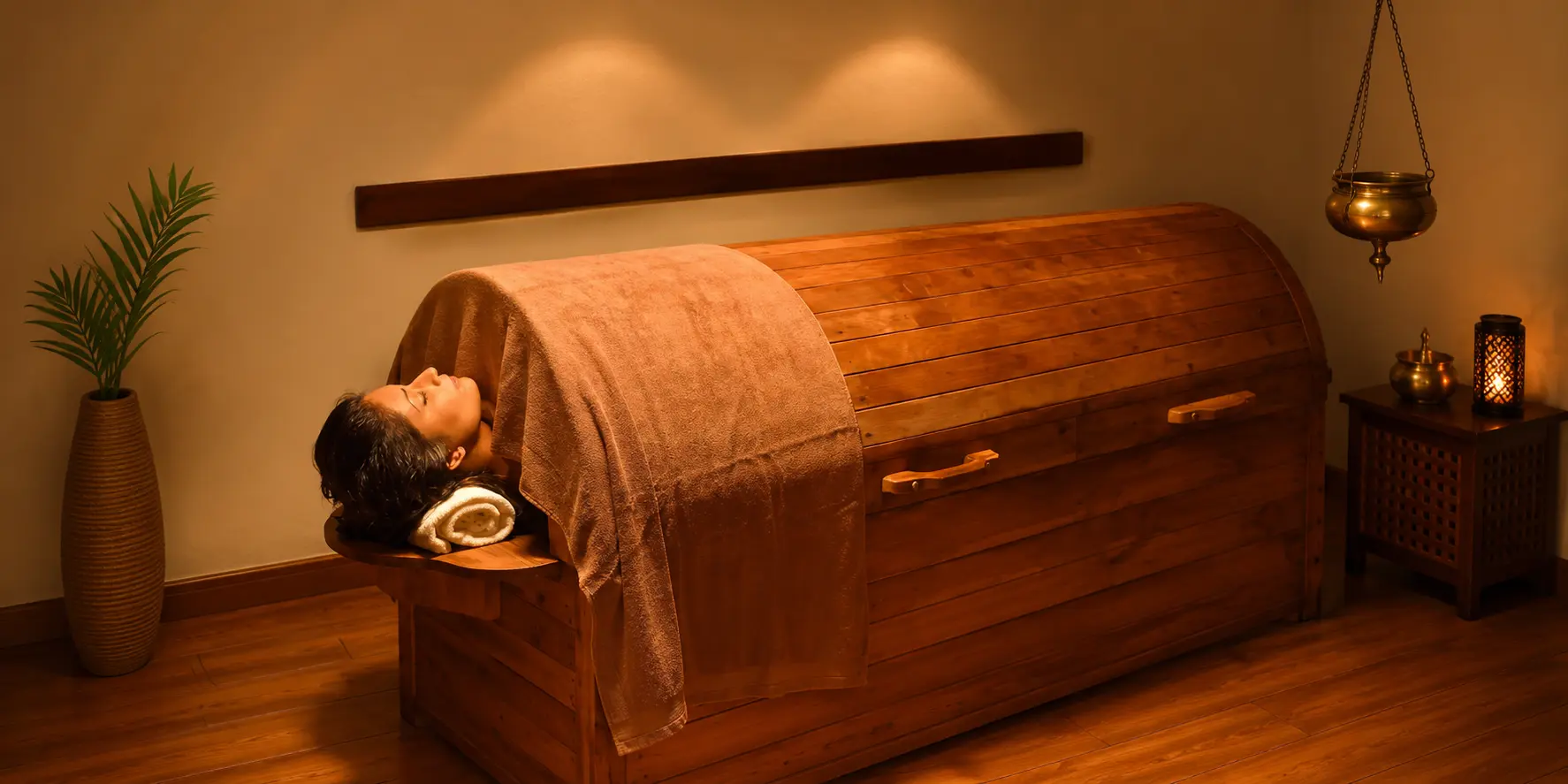
Swedana herbal steam therapy following Abhyanga at Pranavam Ayurveda Hospital Image 3 — Swedana Herbal Steam Therapy Following Abhyanga at Pranavam Ayurveda Hospital

How Is Kerala Abhyanga Massage Performed?

Before treatment begins, the appropriate oil is prepared and warmed to a comfortable temperature. The patient is positioned on the treatment table and the therapist applies oil systematically to the body.

Longer movements are generally used over the limbs, while more circular movements may be used around joints and other areas. In some treatment settings, two trained therapists work in synchronisation. The aim is not necessarily deep pressure, Abhyanga is characterised more by the consistent application of oil, rhythm and technique than by forceful manipulation of the muscles.

Oil preparation

Herbal or medicated oil is selected and warmed to a comfortable temperature.

Positioning

The patient is positioned comfortably on the treatment table.

Systematic application

Oil is applied with longer strokes over limbs and circular movements around joints.

Rest period

A period of rest is generally advised to let the oil settle into the skin.

Swedana (if indicated)

Therapeutic sudation may follow, when clinically appropriate.

Bathing

A warm bath or shower typically follows, based on physician guidance.

What Are the Traditional Benefits of Abhyanga?

Ayurvedic texts and clinical traditions associate Abhyanga with a broad range of uses. Modern scientific evidence for many specific health claims remains limited, so it is useful to distinguish traditional Ayurvedic applications from medically established outcomes.

Muscle Relaxation and Physical Comfort

One of the most immediately noticeable effects of an oil massage is physical relaxation. The combination of warm oil and rhythmic manual movements can feel soothing, particularly after physical strain or periods of inactivity.

In an Ayurvedic treatment programme, Abhyanga may be selected as part of a broader approach for individuals experiencing stiffness or muscular discomfort. It should not, however, be considered a replacement for diagnosis or medical treatment of persistent pain.

Joint Mobility and Lubrication

Ayurveda traditionally places considerable importance on Sneha, or unctuous substances such as oil. For this reason, oil therapies are commonly incorporated into programmes for people experiencing dryness and stiffness.

Massage around joints can also provide a sense of warmth and ease of movement. Claims that Abhyanga directly "lubricates the joints" should be understood as traditional Ayurvedic language rather than a literal claim that externally applied oil enters and lubricates the joint space.

Skin Conditioning

This is one of the more straightforward effects of regular oil application. Oil acts as an emollient and can help soften and moisturise the skin. The experience will vary according to the oil used and the individual's skin type.

Anyone with an active skin condition, infection or known sensitivity to particular ingredients should inform the physician before treatment.

Circulation

Massage temporarily influences blood flow in the tissues being manipulated, and warmth can contribute to the sensation of increased circulation. Ayurveda also traditionally uses Abhyanga to support overall bodily function.

However, broad claims that Abhyanga "improves circulation" or treats circulatory disease go beyond what should be promised from a massage therapy.

Abhyanga and the Nervous System

Many people describe Abhyanga as deeply relaxing. There are several possible reasons. Warmth, repetitive touch, a quiet environment and the slow rhythm of treatment can all contribute to a calmer subjective experience.

In Ayurvedic theory, Abhyanga is particularly associated with balancing aggravated Vata, which is traditionally connected with movement, dryness and irregularity. This is why oil therapies may be incorporated into programmes when restlessness, poor sleep or physical tension are part of the overall presentation.

That does not mean Abhyanga should be presented as a treatment for an anxiety disorder or chronic insomnia by itself. When significant symptoms are present, proper medical assessment remains important.

Signs People Often Seek Abhyanga For

General dryness of skin and joints
Stiffness after inactivity or exertion
Restlessness or disturbed sleep
Muscular tension or discomfort
Fatigue or low physical vitality
Preparation before Panchakarma

How Are Abhyanga Oils Selected?

There is no single "Abhyanga oil" that is ideal for everybody. Oil selection can depend on constitution, current imbalance, climate, age, skin characteristics and the reason for treatment.

Vata

Warming & nourishing

Ayurvedic practice generally favours warming and nourishing oils when Vata characteristics predominate. Sesame oil is a commonly discussed base oil, while specific medicated preparations may be selected by the physician.

Pitta

Cooling formulations

When Pitta characteristics predominate, the physician may choose oils and formulations traditionally regarded as less heating. The decision also depends on the patient's condition and the season.

Kapha

Adjusted quantity & technique

For Kapha-dominant presentations, a physician may adjust the quantity of oil, technique and herbal formulation rather than simply following the same approach used for Vata.

Factors That Influence Oil Selection

Individual constitution (Prakriti)
Current dosha imbalance
Climate and season
Age of the patient
Skin characteristics
Purpose of the treatment

Dosha is only one part of oil selection. Choosing an oil from an online "dosha quiz" is not equivalent to having a clinical Ayurvedic assessment.

Abhyanga as Part of Panchakarma

Abhyanga can be performed as an individual Ayurvedic therapy, but it also has an important place within Panchakarma preparation.

Before certain Panchakarma procedures, Snehana, or oleation, may be prescribed. External oil application can form part of this preparatory process and may be combined with Swedana when indicated.

The purpose and technique therefore depend on where Abhyanga sits within the overall programme.

How Often Should You Have Abhyanga?

There is no universal schedule.

For general wellbeing, Abhyanga may be used periodically according to individual preference and suitability. During an Ayurvedic treatment or Panchakarma programme, it may be prescribed more regularly for a defined period.

More sessions are not automatically better. Frequency should reflect why the treatment is being performed and how the individual responds.

Pranavam Ayurveda Hospital exterior, Kozhikode, Kerala Image 4 — Pranavam Ayurveda Hospital, Kozhikode

Why Choose Pranavam Ayurveda Hospital?

For nearly two decades, Pranavam Ayurveda Hospital has been providing authentic Kerala Ayurveda through physician-led, personalised treatment programmes.

Every patient undergoes a comprehensive consultation before treatment begins, allowing physicians to understand the underlying constitution and condition, and recommend Abhyanga protocols and oil selections tailored to individual needs.

Patients choose Pranavam for:

  • Experienced Ayurvedic physicians
  • Individualised treatment plans
  • Authentic Kerala oil therapies
  • Comfortable inpatient facilities
  • A holistic approach focused on long-term wellbeing
  • Compassionate care rooted in traditional Ayurvedic wisdom

Frequently Asked Questions

Is Abhyanga the same as a regular oil massage?
No. While both involve applying oil to the body, clinical Abhyanga is performed according to an Ayurvedic assessment of the individual's constitution and condition, using specific oils, strokes and duration selected for a therapeutic purpose rather than general relaxation alone.
How long does an Abhyanga session take?
Duration varies depending on the treatment protocol and the reason it has been prescribed. Your physician will advise on the appropriate length and number of sessions for your programme.
Can I shower immediately after Abhyanga?
A period of rest is generally advised after treatment to allow the oil to settle before bathing. Your therapist or physician will guide you on the appropriate interval and water temperature.
Is Abhyanga suitable for everyone?
Abhyanga is generally well tolerated, but suitability depends on individual health conditions, skin sensitivities, and any active illness. A physician consultation before treatment helps determine whether it is appropriate for you.

More Than an Oil Massage

The easiest way to misunderstand Abhyanga is to judge it by the amount of pressure used or how relaxing it feels.

In classical Ayurvedic practice, the important questions are different: Which oil is appropriate? Why is the therapy being prescribed? How should it be performed? And how does it fit into the rest of the treatment programme?

That is what separates physician-guided Kerala Abhyanga massage from a generic spa oil massage. At Pranavam, Abhyanga therapy can be prescribed according to individual Ayurvedic assessment, either as a standalone therapy or as one component of a broader treatment programme.

Ready for a Personalised Ayurvedic Assessment?

Book a consultation with Dr. Sreejith or Dr. Diana Sreejith to find out which Abhyanga protocol and oil selection are right for you.

This article is for general educational purposes and does not constitute individual medical advice. Abhyanga and other Ayurvedic oil therapies should only be undertaken following a full consultation and ongoing supervision by a qualified Ayurvedic physician. Treatment outcomes vary by individual.