
Acne and Ayurveda: Balancing Pitta Dosha for Clearer Skin
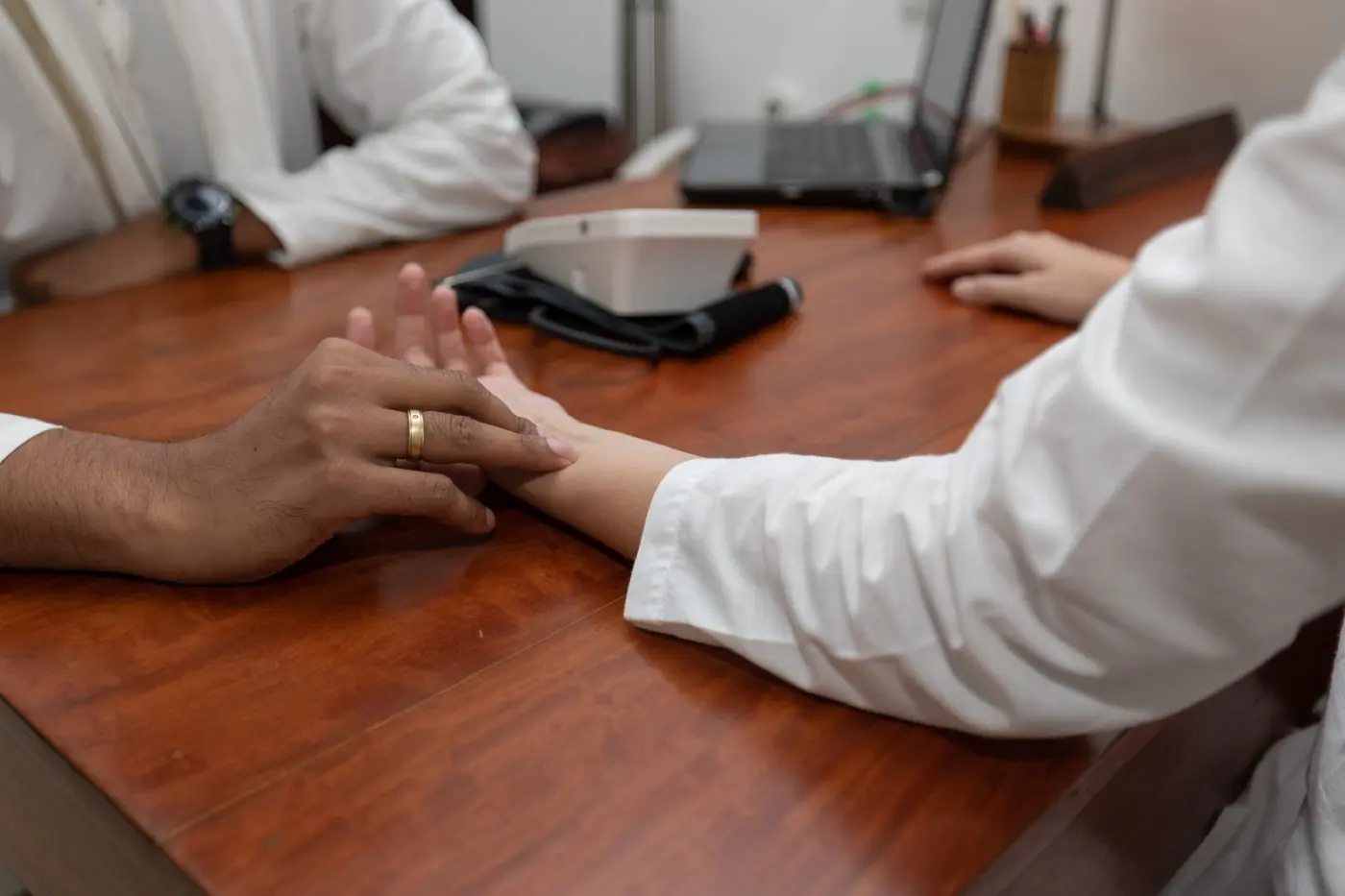
Acne and Ayurveda: Balancing Pitta Dosha for Clearer Skin
Persistent acne is often linked to Pitta and Rakta imbalance in Ayurveda. Diet, herbs and detox therapies that support clearer skin from within.
In Ayurveda, persistent acne is rarely treated as just a skin-surface problem. It is usually read as a sign of aggravated Pitta and impure Rakta (blood tissue), which is why the most lasting approach works on digestion, diet and internal cleansing, not only on creams.
Acne Beyond "Oily Skin"
Most people describe acne as a surface issue: too much oil, clogged pores, a bad batch of products. Yet many who keep their skin meticulously clean still break out month after month, and many with dry or mixed skin get painful, inflamed pimples too.
That pattern is hard to explain by oil alone, and it is exactly where the Ayurvedic view of skin differs. Ayurveda treats acne (traditionally described as Yauvana Pidaka or Mukhadushika) as an outward sign of what is happening inside: digestion, blood quality and dosha balance. This guide explains that view, the diet and therapies built around it, and what clearer skin realistically takes.
The Ayurvedic View: Pitta, Rakta Dushti, Kapha and the Gut
Three ideas explain most acne in classical Ayurvedic thinking, and they usually work together rather than separately.
Heat · Pitta
Aggravated Pitta
Pitta governs heat, digestion and transformation. When it is aggravated, heat shows up in the skin as redness, inflammation, tenderness and pus-filled pimples, often on the forehead, cheeks and chin. Hot, sharp, oily and sour influences, both in food and in lifestyle, tend to push Pitta higher.
Blood · Rakta Dushti
Rakta Dushti (Impure Blood Tissue)
Ayurveda considers the skin closely tied to Rakta. When aggravated Pitta vitiates Rakta, the impurity is expected to surface through the skin as eruptions, dark marks and recurring breakouts. Acne that returns in the same places, or leaves lasting marks, is often read this way.
Congestion · Kapha and Agni
Kapha and the Gut Connection
Kapha contributes the oiliness, thickness and blocked pores seen in cystic or whitehead-type acne. Weak digestion (Agni) produces Ama, partly digested material that clogs the body's channels. Many Ayurvedic physicians therefore look at constipation, acidity, bloating and irregular meals as part of the acne picture, because the gut is considered the starting point.
Hormonal Acne and the PCOD Link
Acne that flares around periods, appears mainly along the jawline, or continues well into adulthood often has a hormonal component. In women, it can accompany irregular cycles, excess hair growth or weight changes, which are common features of PCOD/PCOS.
Ayurveda does not treat this as a separate skin problem. Hormonal acne is usually approached as part of a wider imbalance involving Pitta, Kapha and metabolic strength, so the treatment plan addresses the cycle and digestion alongside the skin. If you have irregular periods together with persistent acne, a proper evaluation is worthwhile before assuming it is only a skin issue. You can read more about our approach to PCOD/PCOS treatment at Pranavam.
Diet: Cooling Foods and Common Triggers
Diet is considered one of the strongest levers in Pitta-type acne. The general principle is to cool and lighten what you eat, and to reduce the foods that add heat or heaviness.
TRIGGER 01
Spicy and Sour Foods
Chilli-heavy dishes, pickles, excess tamarind and very sour preparations raise Pitta and are commonly reported as flare-up triggers.
TRIGGER 02
Fried and Oily Foods
Deep-fried snacks, bakery items and heavy gravies add both heat and Kapha-type heaviness, which burdens digestion.
TRIGGER 03
Dairy-Heavy Habits
Frequent cheese, sweetened curd at night and rich milk sweets are reduced in many acne plans, as they can add heaviness. Individual tolerance varies.
TRIGGER 04
Lifestyle Heat
Late nights, skipped meals, long hours in heat, stress and suppressed anger are all described as Pitta-aggravating influences.
On the supportive side, physicians commonly recommend cooling and easily digested foods:
- Fresh seasonal vegetables such as ash gourd, cucumber, bottle gourd and leafy greens, cooked simply.
- Moong dal, rice and light, warm, freshly cooked meals eaten at regular times.
- Sweet, juicy fruits such as pomegranate, sweet apples and coconut water, in moderation.
- Plenty of water through the day, and early, light dinners.
Ayurvedic Treatments for Acne
Treatment is individualised after a physician's assessment, and usually combines internal medicines, cleansing therapy and local application. These are the main options.
01
Virechana
A controlled, medically supervised purgation therapy aimed at removing excess Pitta from the body. It is often considered the primary detox option for recurrent, inflamed acne, and is carried out only after proper oleation and preparation.
02
Herbal Support
Internal formulations built around blood-purifying and Pitta-pacifying herbs, with digestion-supporting medicines where the gut is part of the picture.
03
Lepa (Topical Pastes)
Herbal pastes applied to the face to calm inflammation and reduce excess oil, prepared and chosen according to whether the acne is inflamed, oily or scarring.
04
Raktamokshana
A blood-purification procedure used only in select cases, such as stubborn, localised and recurrent inflammatory lesions, and not as a routine acne treatment.
Herbs commonly used in acne care
HERB
Neem
Traditionally valued for its bitter, cooling, blood-cleansing character and used both internally and in topical preparations.
HERB
Manjistha
A classical Rakta-purifying herb, frequently included in formulations for skin eruptions and marks.
HERB
Turmeric
Used in Lepa and in internal formulations for its traditional role in calming skin inflammation.
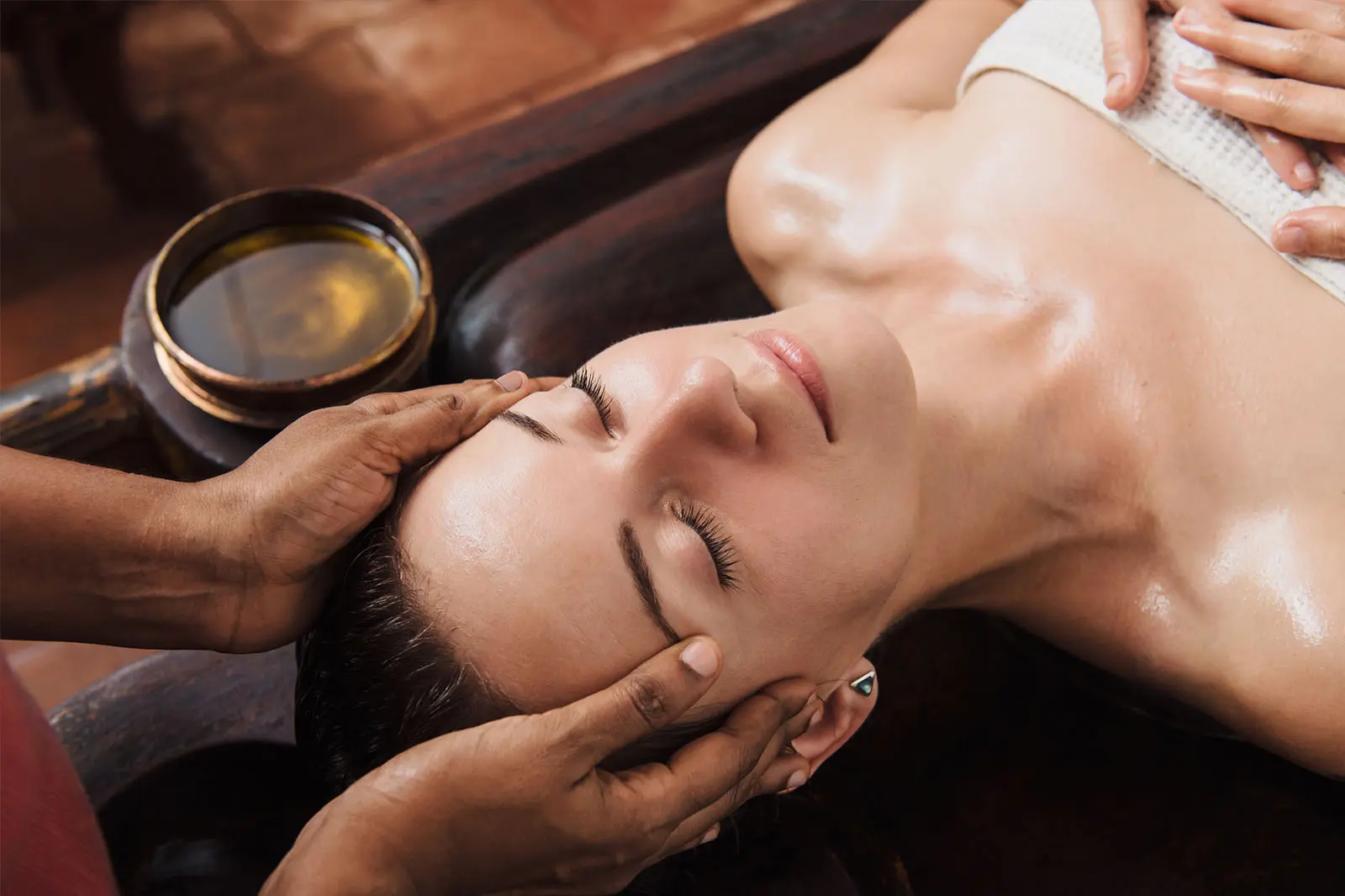
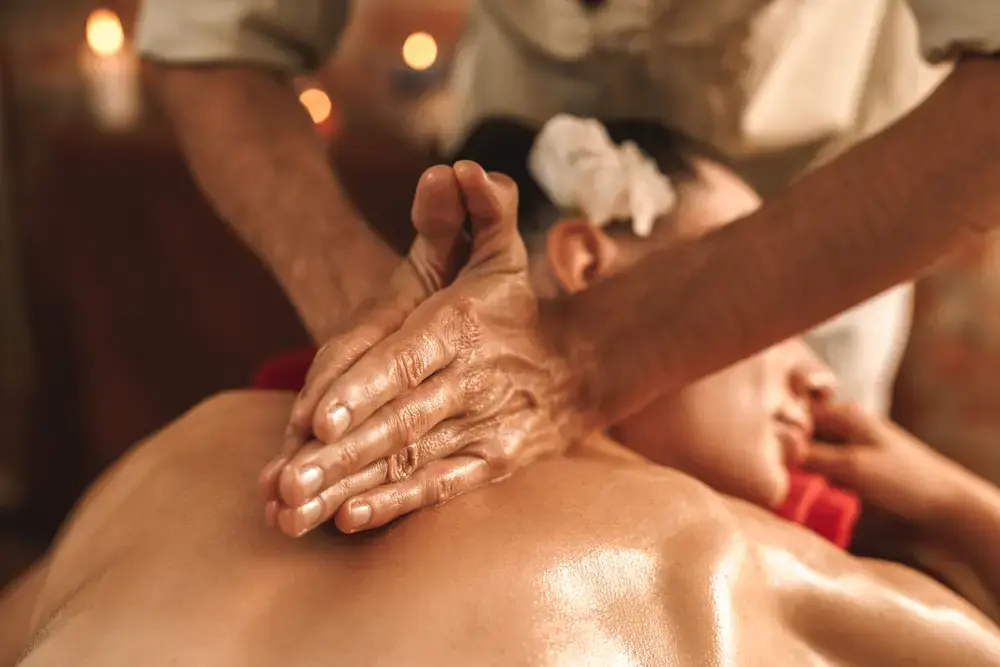
A note on self-treatment: Virechana and Raktamokshana are clinical procedures. They should never be attempted at home or at an unsupervised centre, and they are only suitable after a physician has assessed your constitution, digestion and overall health.
A Simple Skin Routine
Ayurveda favours gentle, consistent care over aggressive scrubbing and frequent product changes, which can irritate already inflamed skin. A routine built around the following steps is typical:
Wash with lukewarm or cool water and a mild, herbal cleanser. Avoid hot water and harsh scrubs.
Drink water regularly, keep meals light and on time, and avoid touching or picking at pimples.
Cleanse again after sweat or dust, and apply a prescribed Lepa or herbal preparation if advised.
Eat dinner early and light, and aim for consistent, adequate sleep. Late nights tend to aggravate Pitta.
Realistic Timelines
Acne that has built up over months or years rarely clears in days. Because Ayurvedic care works on digestion and the internal pattern, improvement is usually gradual. These are commonly reported patterns, not a guarantee.
First few weeks
Digestion, bowel regularity and new breakouts often respond first. Existing lesions may still be present.
1–2 months
Many people notice fewer new eruptions and less inflammation and oiliness, provided diet and routine are followed.
3 months
Skin texture and tone typically continue to settle. Where Virechana is advised, it is planned within this phase.
Beyond
Marks and scarring fade more slowly, and sustained diet and lifestyle habits matter for keeping the skin clear.
Response varies with the type and severity of acne, hormonal factors, diet, stress and how consistently the plan is followed. Ongoing physician review allows the plan to be adjusted along the way.
Frequently Asked Questions
Can Ayurveda cure acne permanently?
Which foods trigger acne in Ayurveda?
Is Virechana good for acne?
How long before skin improves?
Struggling With Persistent Acne?
Every plan at Pranavam begins with a physician assessment of your skin, digestion and dosha balance, not a one-size-fits-all package. Get a personalised read on what is driving your breakouts before you commit to anything.
Book a ConsultationRelated Reading
This article is for general educational purposes and does not constitute individual medical advice. Severe, painful or scarring acne, or acne with irregular periods or other symptoms, should be evaluated by a qualified doctor. Ayurvedic treatment should only be undertaken after consultation with and under the supervision of a qualified Ayurvedic physician. Individual experience and outcomes vary.